How to Photograph People Abroad

It’s usually a safe bet to assume that a person going on a volunteer trip abroad is a respectful person who is considerate of others.

Unfortunately, something strange seems to happens when many of these otherwise good folks get a camera in their hand abroad.

They tend to lose all sense of decorum and respect for others. It usually takes the form of pointing cameras in peoples’ faces as well as capturing private moments.

How can you be respectful of people while still getting some memorable shots to show off?

Tips for Photographing People Abroad

1. Connect First. Get to know the person before you take their photo. Don’t just shove a camera in someone’s face. For example if she’s a vendor at a market — buy something from her as you strike up a conversation. Talk about not just her shop but perhaps her family, kids, grandchildren, the town, the weather (it’s a universal topic!)

2. Ask permission. Even after establishing a rapport — ask the person if it’s OK to photograph them. I realize that there’s a saying, “It’s easier to ask for forgiveness than for permission” — but this isn’t one of those times to follow this rule. Be nice and ask first.

3. Pay them. This might seem strange, especially to those who haven’t traveled much. But keep in mind that for years foreigners have used photos of locals’ to make money via commercial guide books, prints, and websites — without any permission or payments to the locals in the photos. Locals have become savvy to this, so they don’t want anyone using their image without remuneration. So — offer to pay them. I’ve found that the going rate in most countries is about $1 US Dollar.

4. Respect Privacy. The Pashupatinath Temple in Nepal is one of the most important Hindu temples in the world. Among other activities, locals hold funerals at the temple (on the banks of the Bagmati River) that are easily visible to the public. Foreigners just can’t seem to resist taking photos of the deceased and their mourners. Question: How would you like it if a stranger was standing graveside taking photos as you buried your grandmother? Just because something is publicly visible doesn’t mean it’s right to take a photo.

5. Offer to send a photo. After talking with the subject of your photography, offer to send them a printed copy(s) of the photo (either while you’re still in-country or after returning home). But don’t make a promise to them that you’re not going to keep! If you say you’ll send a copy, then do it of course. They’ll appreciate the gesture and likely tack the photo on their wall (especially if it’s a kid).
Google Glass Policy

This is the world’s first policy on Google Glass.

Google Glass Policy

Cosmic Volunteers prohibits the use of Google Glass by our participants to make audio-visual recordings without the consent of the parties involved in our volunteering abroad programs.

These parties include but are not limited to: the children and staff at orphanages, shelters and day care centers; patients and staff at hospitals; students and staff at schools, host family members, Cosmic Volunteers’ staff, and any other persons involved in our programs.

This policy is designed to protect the privacy of those people abroad who generously welcome our participants and staff into their lives via our volunteering programs.

Background on Google Glass

Released in early 2013, Google Glass is a computer with a head-mounted display and wearable camera. It is being developed by Google. Google Glass provides its wearer with the ability to easily make surreptitious recordings. Google (the company) has the ability to index, tag, and store online indefinitely the identity and spoken-words of everyone in the recording – all without the consent of either the Google Glass wearer or the people in the recording.

Violations of Google Glass Policy

Any violations of this policy will result in the following:

First Violation:

Participant will be warned by Cosmic Volunteers’ staff of the policy violation. Cosmic Volunteers’ staff will ask Participant to immediately delete all audio-visual recordings the latter made without the consent of the parties involved.

Second Violation:

Cosmic Volunteers’ staff will cancel the Participant’s program immediately with no refund. Cosmic Volunteers’ staff will ask Participant to immediately delete all audio-visual recordings the latter made without the consent of the parties involved.

Throw Up in India

We came across a blog post by entrepreneur James Altucher in which he provides 8 Alternatives to College.

We particularly like his reason number 2 — “Travel the World”:

“Here’s a basic assignment. Take $10,000 and get yourself to India. Check out a world completely different from our own. Do it for a year. You will meet other foreigners traveling. You will learn what poverty is. You will learn the value of how to stretch a dollar. You will often be in situations where you need to learn how to survive despite the odds being against you. If you’re going to throw up you might as well do it from dysentery than from drinking too much at a frat party. You will learn a little bit more about eastern religions compared with the western religions you grew up with. You will learn you aren’t the center of the universe. Knock yourself out.”

Costs to Volunteer in Uganda

A potential volunteer from London just asked us how much it would cost her to volunteer at a clinic in Uganda for two weeks this summer. So we thought we would share the cost estimate information with everyone:

Costs for Two Weeks Volunteering in Uganda:

Our Program Fee: 760 GBP ($1155 USD)
Round-trip flight from London: 643 GBP ($977 USD)
Visa fee: 33 GBP ($50 USD)
Yellow Fever vaccination: 66 GBP ($100 USD)
Miscellaneous spending*: 182 GBP ($276 USD)
———————————————————————
Total: 1684 GBP ($2561 USD)

* 13 GBP per day average for snacks, shopping, sightseeing, Internet etc.

2013 High School Service Learning Trip to India

Our brochures will be out next week for our High School Service Learning Trip to India in the summer of 2013.

(We’ll be posting links next week on Twitter and Facebook to the PDF version of the brochure)

What’s this trip all about? It’s two weeks in India, specifically Delhi, volunteering while learning about Indian society and culture.

Some of the highlights of the trip will include:

  • Volunteering with children at a care center
  • Visiting the Taj Mahal
  • Weekend stay in the city of Jaipur
  • Homestay with an Indian family
  • Yoga and Bollywood dancing classes
  • Visits to Hindu and Buddhist temples

Here is one of our albums from Delhi:

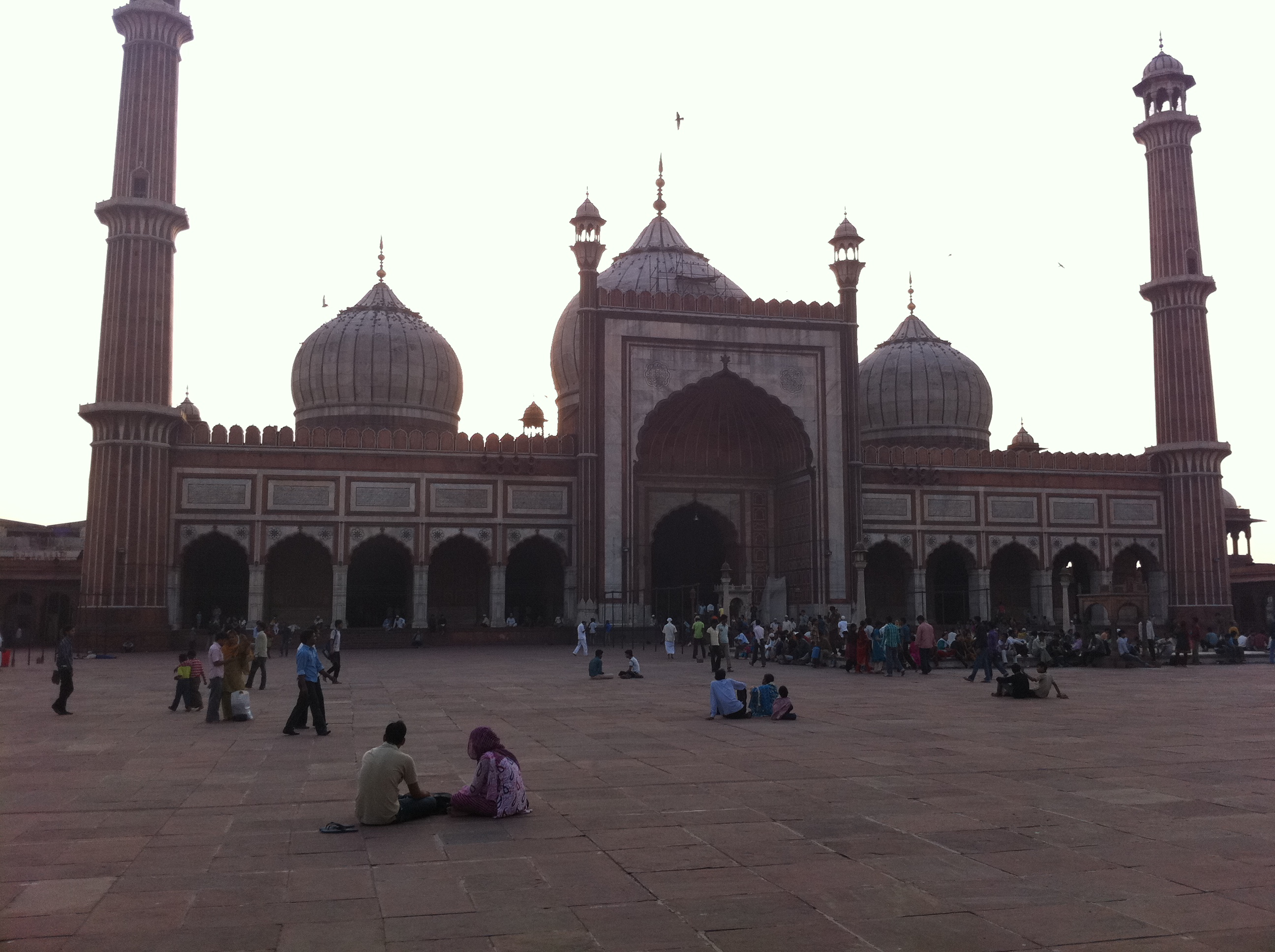
Jama Masjid Mosque in Old Delhi, India

The Jama Masjid Mosque of Delhi is one of the largest mosques in India and a must-see attraction.

We take all participants on a tour of Old Delhi when they first arrive in India for their volunteer program.

The mosque is old — built in the 1600’s by Mughal emperor Shah Jahan. The courtyard can accommodate more than 25,000 persons. There are three domes on the terrace which are surrounded by the two minarets.

On the floor, a total of 899 black borders are marked for worshippers. The architectural plan of Badshahi Masjid, built by Shah Jahan’s son Aurangzeb at Lahore, Pakistan, is similar to the Jama Masjid, Delhi.

The mosque has seen terrorist attacks in modern times — in 2006 and in 2010.